How to Use Scent to Create a More Relaxing Bedroom
A bedroom should feel like a calm, restorative space. The right scent can quietly shift the mood, lower tension, and make it easier to fall asleep and stay asleep. This post gives practical, trustworthy steps to choose, place, and combine scents so your bedroom becomes a true relaxation zone.
Below you’ll find scent choices, delivery methods, safety tips, and simple routines you can implement tonight. Links point to carefully selected WowVibe products and categories that match each recommendation.
How scent helps relaxation
Smell is directly connected to the brain’s limbic system, the area that controls emotion and memory. Calming fragrances — like lavender, chamomile, or cedarwood — can reduce perceived stress and create a predictable nighttime cue for your body to wind down. Use scent strategically: subtle, consistent aroma cues work better than occasional, strong bursts.
Choosing calming scents
Start with a short list of well-supported calming scents: lavender, bergamot, chamomile, ylang-ylang, frankincense, and cedarwood. Try small, single-scent trial bottles first so you can evaluate how a scent affects your mood and sleep quality over several nights.
For an easy starter collection, consider a ready-made kit that includes travel-size options for testing and mixing. A curated set simplifies experimenting without wasting large bottles.
Shop a comprehensive starter kit: Essential Oils Set.
Choosing a diffuser for the bedroom
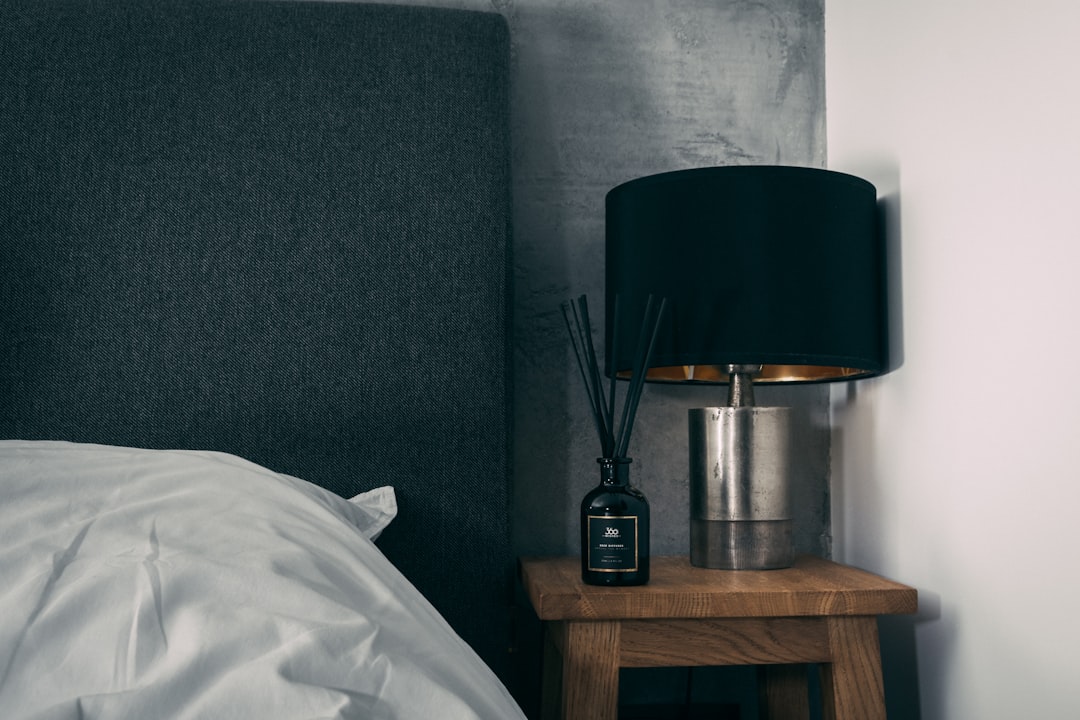
Diffusers provide steady, controllable scent and are generally the safest way to scent a bedroom overnight. There are passive reed diffusers, ultrasonic water-based diffusers, and waterless/mist machines with longer coverage. Choose a unit with adjustable intensity and a timer so the scent fades as you enter deeper sleep cycles.
Explore appropriate options here: Aromatherapy Diffusers.
Diffusing safely and effectively
Use these practical rules when running a diffuser:
- Run at low to medium output. Strong scent can be stimulating or cause headaches.
- Use timers or intermittent modes. Aim for 20–30 minute cycles before bed rather than continuous diffusion all night.
- Keep the diffuser away from the pillow and face to avoid overpowering close inhalation.
- Follow manufacturer cleaning guidance to prevent mold and oil buildup.
If you want steady, room-filling scent with reliable settings, start with a unit designed for home fragrance: Essential Oil Diffusers.
Other scent delivery methods and when to use them
Diffusers are not the only option. Match the delivery method to your goal:
- For ritual and ambiance: Scented Candles provide warm, flickering light and a gradual scent release. Use unscented candles for long burns if you’re sensitive, or soy/coconut wax for cleaner burn.
- For quick refresh or guest touch-up: Room Sprays give instant aroma but should be used sparingly and avoided near fabrics where residue can concentrate.
- For flameless scent or layered fragrance: Wax Melt Warmers let you control intensity and swap scents easily without an open flame.
Combining scent with light and sound for deeper relaxation
Scent works best as part of a multi-sensory routine. Dim lights and gentle sound cues amplify the calming effect.
Use warm, low-output lighting to signal wind-down time. For integrated mood lighting options, see: LED Mood Lighting.
Pair that with consistent sleep-friendly sounds — a short sound session (15–30 minutes) of white noise or soft nature sounds can mask disruptive noises while your scent establishes the bedtime cue. Consider reputable units designed for sleep: White Noise Machines.
Placement and layering strategies
Placement matters. Aim for even scent distribution and avoid hotspots:
- Central placement: put diffusers or warmers on a bedside table or nightstand that isn’t directly under the nose.
- Layer scents lightly: use a diffuser with a low setting and, if desired, a complementary candle or wax melt on an opposite side of the room.
- Rotate scents across nights to prevent olfactory fatigue; stick to the same scent each night for at least a week to determine its true effect on your sleep.
Care, safety, and sensitivity
Basic safety keeps scent beneficial rather than harmful:
- Dilute essential oils when applying to fabric or using on skin; concentrate only for topical use with proper carrier oils and testing.
- Keep candles away from bedding, curtains, and pets; never leave lit candles unattended.
- If you or a partner have allergies, test new scents in short bursts and monitor reactions for several hours.
Checklist: Quick setup for a relaxing bedroom
- Pick one primary calming scent (lavender or bergamot recommended).
- Choose a diffuser or flameless warmer with timer settings.
- Set lighting to warm, dim levels 30–60 minutes before bed.
- Start a 20–30 minute sound session (white noise or soft nature sounds).
- Run scent on low for the first week and note changes in ease of falling asleep.
- Clean devices weekly and rotate scents to avoid adaptation.
FAQ
-
Q: How long should I diffuse scent before bed?
A: Begin 20–60 minutes before your planned bedtime and use intermittent cycles or a timer. This establishes a cue without overwhelming the space.
-
Q: Can I use essential oils if I have allergies?
A: If you have known sensitivities, test a small area first and use minimal diffusion. Select single-note, less allergenic oils and stop use if irritation occurs.
-
Q: Are candles better than diffusers?
A: Candles add ambiance but involve an open flame and stronger scent release. Diffusers offer controlled, safer overnight scent. Use candles for short pre-sleep rituals and diffusers for continuous low-level aroma.
-
Q: Which scent is best for anxiety and sleep?
A: Lavender and bergamot are widely used for relaxation. Frankincense and chamomile are also calming; test each for personal preference and effect.
-
Q: How do I prevent scent fatigue?
A: Rotate scents every few nights and give your nose one scent-free night per week to reset your sensitivity.
Conclusion
Using scent to create a relaxing bedroom is about consistency, subtlety, and safe delivery. Choose a calming scent, deliver it through an appropriate device on low settings, and pair it with dim lighting and gentle sound. Small, repeatable routines — rather than one-off strong aromas — produce the most reliable improvement in relaxation and sleep readiness.
Products Featured in This Article

Essential Oils Set, Aromatherapy Es…
Product description Perfect for diffuser Add 5~7 drops of an oil or oil blend of your…